
Private label dropshipping: what it costs to switch
What private label dropshipping requires: MOQ, tooling, and the order volume at which it stops being theoretical.
8 min read
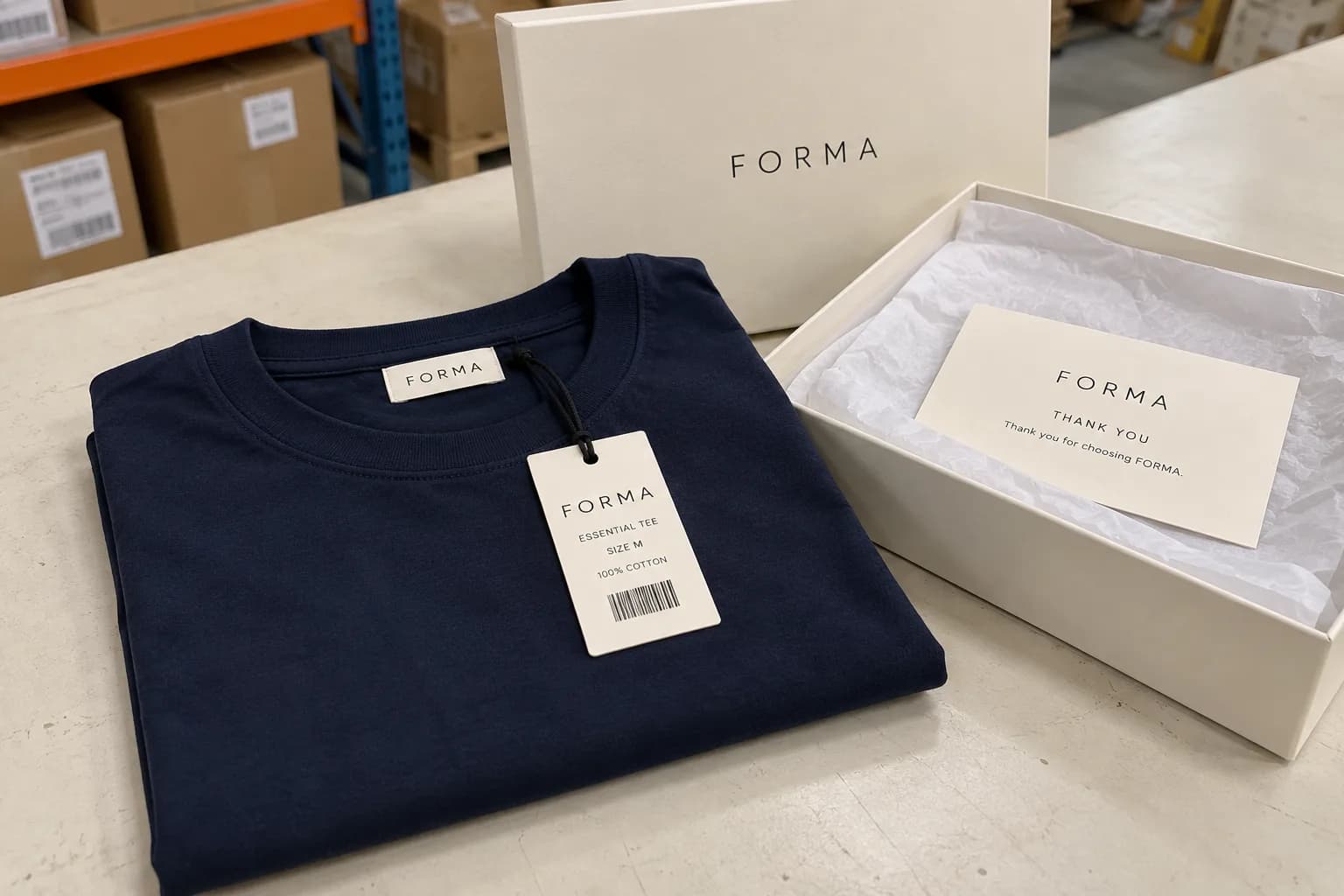
Private label dropshipping is sold as the obvious next step: same business, your name on the box, better margins. The first two are true. The third depends entirely on numbers nobody puts in the article.
This is what the switch actually requires, where the money goes before the first unit sells, and the order volume at which it stops being theoretical.
What private label dropshipping actually means
You sell a product made to your specification, under your brand, and nobody else can buy that exact product. The goods are held somewhere and shipped per order, so you keep the low inventory commitment that made dropshipping attractive.
That is the difference from plain dropshipping, where you resell a listing anyone else can also resell, in the supplier's packaging, on the supplier's timeline.
It is also different from white label, where an existing finished product gets your label on it. White label is cheaper and faster; the same product is sold to several brands with different labels. White label vs private label sets out that pair properly.
| Plain dropshipping | White label | Private label | |
|---|---|---|---|
| Product | Someone else's listing | Existing product, your label | Made to your spec |
| Exclusive to you | No | No | Yes |
| Setup cost | None | Low | Real |
| MOQ | One | Low | Higher |
| Packaging | Supplier's | Usually yours | Yours |
| Right at | Testing | Proving a category | A proven SKU |
The four costs that arrive before the first sale
This is the section the other articles skip, and it is the only part that determines whether the switch is viable at your volume.
Tooling. If the product needs a mould, a last or a print plate, it is paid for once and amortised across the run. This is the cost that most distorts a comparison: a supplier quoting a higher unit price with no tooling charge can be cheaper across a first run and more expensive across a third. Amortise it over the quantity you will realistically order, not the quantity you hope to.
Minimum order quantity. The MOQ is not the factory being difficult — it is the factory recovering the setup cost over the units it makes. Which is why the useful question is not "can you lower the MOQ" but "what sets it". A label change on an existing formulation starts low. A new injection mould starts high. What drives MOQ by product category maps that properly.
Sampling. Several rounds, each a production cycle plus a shipment each way. It is routinely underestimated and it is the longest part of the timeline. It is also the last cheap place to discover that your specification was ambiguous.
Certification and testing. Per market and per variant. Cosmetics, supplements, anything electrical and anything for children carry real, non-refundable regulatory work. Budget it before you sample, not after.
On top of those: packaging artwork, inspection, freight, duty, and the cost of a run that fails. Sourcing is quoted per project against what the product and the volume actually require — any article quoting you a single percentage is quoting an average of work it has not seen.
The volume at which it starts to make sense
Private label needs a SKU that is already selling. Not a product you believe in — one with sales history.
The reason is arithmetic. Tooling, sampling and MOQ are fixed costs. Divided across 2,000 units they are a line item. Divided across 50 they are the whole margin. A SKU that sells 15 units a month will take years to absorb a mould.
Around 10 orders a day is where fulfilment of any kind starts paying for itself. Private label sits above that, on the SKUs inside your catalogue that are already proven. Starting with your whole range is the common and expensive mistake.
The split almost nobody runs
The standard framing is a switch: dropshipping, then private label. The better shape is both at once.
Keep testing new products the cheap way, with no stock commitment and no tooling. Move only the proven winners to private label, where the exclusivity and the branding are worth paying for.
That way the testing stays cheap and the winners get the treatment that justifies the cost. Very few sellers run it this way, and most should.
What changes operationally
Once a product is made to your specification, three things become your responsibility that were previously nobody's.
The specification itself. Not a description — criteria a third party could apply and reach your verdict. The test is simple: could someone who has never spoken to you judge a sample against it?
Quality control. With a marketplace listing, your customer is the first inspector. With private label, goods should be checked before they are put into stock, because a bad batch is now a bad batch of your brand.
Where stock sits. Held in your customer's region, it ships domestically and ties up cash. Held in China, it ships internationally and does not. On the China to United States lane we see 6 to 12 days on standard service and 3 to 5 on express, destination-dependent — ranges from our own shipments, not a guarantee.
Private label, OEM and ODM sets out how we coordinate the production side of this.
Common questions
What is private label dropshipping?
How much does private label dropshipping cost to start?
What is the minimum order quantity for private label?
Is private label better than dropshipping?
Can I do private label with a low budget?
Who owns the tooling I paid for?
Have a SKU worth private-labelling?
Send the product and the volume it already does. We come back with what it would take: the MOQ, what sets it, and what we would check before it ships.