
China factory audit: what to check before you commit
A supplier audit checklist for China you can hand to someone else: what to verify on paper, what only a visit answers, and what each finding means.
9 min read
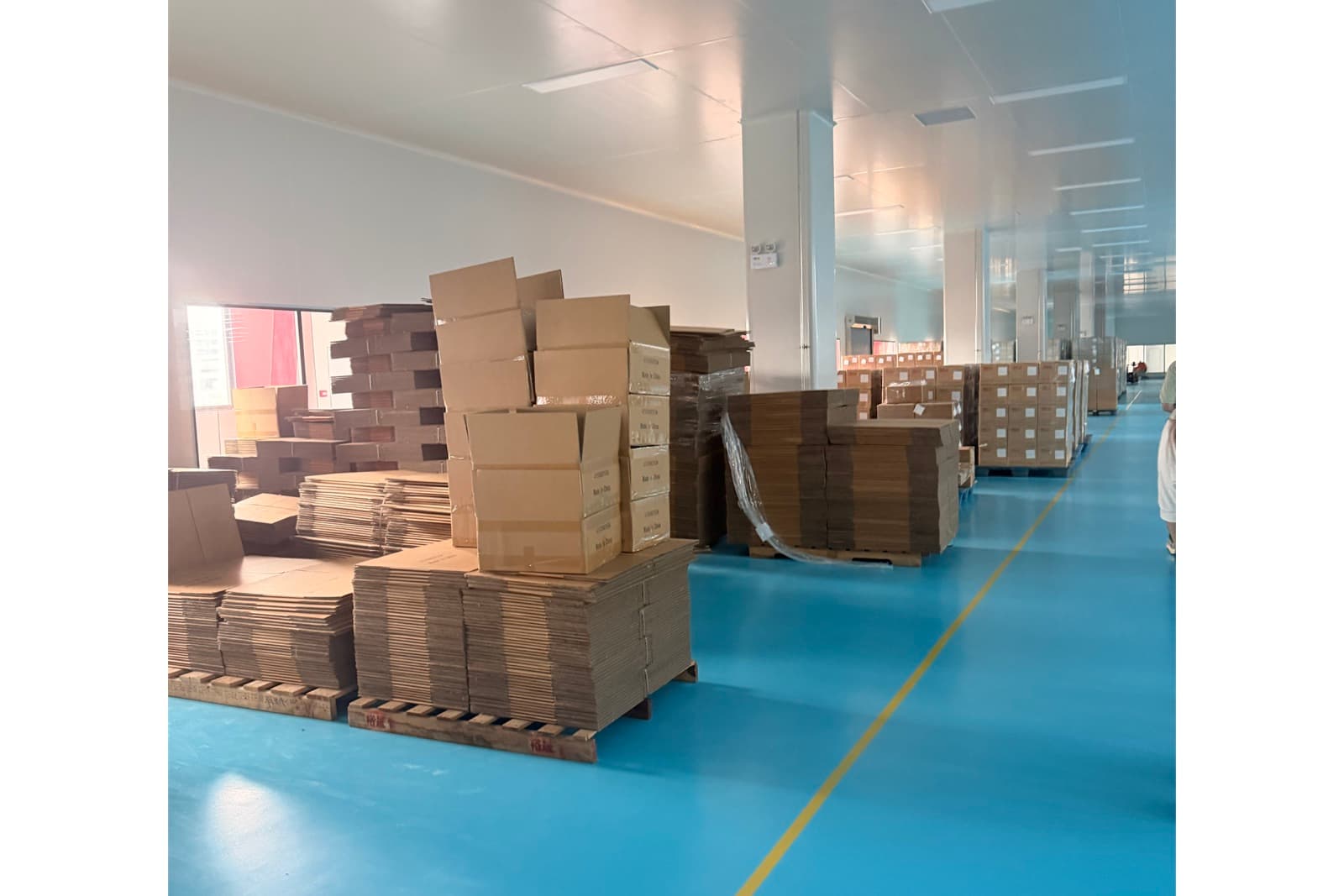
Neofulfill checks suppliers for its clients, so this is not a neutral article. It is written as a checklist precisely so you can apply it without us — including to us.
A factory audit in China sounds like something that requires a plane ticket. Most of it does not. The majority of what separates a real supplier from a convincing one is public record, and you can work through it in an afternoon.
Searched as factory audit China or supplier audit China, it is the same job under two names: establishing whether a company is what it says it is, before you commit money to it.
What follows is the order we work in, what each check actually tells you, and the small part that genuinely needs someone in the building.
The four things an audit is trying to establish
Not "is this supplier good". Four narrower questions, each with a different kind of evidence behind it.
- Does this company exist as described? Registration and business scope.
- Can it legally sell this product into my market? Certification, per product and per destination.
- Does it deliver for people like me? Reputation, and reviews from its own customers.
- Can it actually make this? Capacity, equipment, and the people on the floor.
The first three are desk checks. Only the fourth needs eyes on the building, which is why it is the one most often skipped and the one that most often explains a failure after the fact.
Registration: the check that takes ten minutes
Every registered Chinese company has a business licence. It carries a unified social credit code, the registered capital, the date of registration and the registered business scope.
The scope is the useful field. A manufacturer's scope says manufacturing. A trading company's says trade. If the scope and the claim disagree, you have learned something before spending anything, and which of the four kinds of supplier you are dealing with sets out why that distinction changes the whole relationship.
Asking for the licence is routine in China and not an accusation. A refusal is a finding.
Certification: check coverage, not the certificate
This is where most audits go wrong, and the failure is subtle. People verify that a certificate is genuine and stop there.
A genuine certificate proves something was certified. It does not prove that your product was certified, that the certificate is still current, or that it covers the market you sell into.
So three questions, in this order: does it name the product I am buying, is it in date, and is the body that issued it recognised where I sell? Any one of those failing makes the certificate decorative.
Neofulfill reviews supplier and product certifications. It does not hold or issue any, and no one should present a sourcing partner's involvement as a certification in itself.
Reputation: ask the customers, not the supplier
A reference list supplied by the supplier is a marketing asset. The useful version is narrower: a buyer in your market, shipping a comparable product, under the compliance rules you are subject to.
What you are listening for is not praise. It is specifics — what went wrong once, and what the supplier did about it. A relationship with no incident in it is either very new or being described selectively.
Platform ratings are worth reading and worth discounting. They measure transaction behaviour on one platform, and a supplier can be reliable at shipping small orders on time while being the wrong choice for a production run.
Capacity: the part a document cannot answer
Everything above can be faked with paperwork that is itself genuine. What cannot be faked is the floor.
What you are looking at is narrow. Not whether the factory is impressive — whether it is set up to make your product at your quantity.
- The line that would run your order. Not the showroom line. The one your goods would go down.
- Equipment that matches the specification. A tolerance you wrote down requires a machine that can hold it.
- Whether anyone is working. A clean, idle floor during a working week is a question, not a reassurance.
- Who you are allowed to talk to. Being kept to your sales contact is a finding.
Where the project warrants it we go to the factory and meet the people who work there. That is not every project, and any supplier-side partner telling you they visit every factory every time is describing an ambition rather than a schedule.
The video walk, when a visit is not proportionate
A live, unscripted video call from the floor covers more than people expect. Live rather than recorded, this week rather than a file they already have, and on the line making your product.
Ask them to pan where you point. The value is in it being unrehearsed; a recorded tour is a brochure that moves.
A supplier who will not do this on a serious enquiry has told you something, and it rarely costs anything to ask.
The checklist
Hand this to whoever is doing the work. It is written so that someone who has never spoken to the supplier can reach the same verdict you would.
| Check | Evidence | Fails if |
|---|---|---|
| Company exists as described | Business licence | Scope contradicts the claim |
| Registered long enough to have a record | Registration date | Formed weeks ago with no history |
| Certified for this product | Certificate naming the product | Covers a different item |
| Certification is current | Expiry date | Lapsed, or renewal 'in progress' |
| Valid for my market | Issuing body | Not recognised where you sell |
| Delivers for buyers like me | A reference in your market | Only supplier-chosen references |
| Handles problems well | An account of one going wrong | No incident has ever occurred |
| Can make this at this quantity | The line, on video or in person | Showroom only, or no live view |
| Access beyond the sales contact | A call with production | Routed back to sales |
When the audit ends and inspection starts
An audit answers whether to work with a supplier. It does not answer whether this batch is right, and the two get conflated constantly.
A supplier who passed an audit in March can ship a bad run in September, because the audit measured the company and the run is a different object. That is what pre-shipment inspection is for, and how AQL sampling works covers how a batch is judged rather than a company.
Audit once before you commit. Inspect every run. Treating either as a substitute for the other is the expensive version of this.
Quality control and production follow-up sets out how we run the second half of that on live orders.
Common questions
What is a China factory audit?
What is the difference between a factory audit and a supplier audit?
How much does a factory audit in China cost?
Can I audit a Chinese factory remotely?
What certifications should a Chinese supplier have?
What are the red flags in a factory audit?
Want a supplier checked before you commit?
Send the supplier and what you are ordering. We check certifications, reputation and reviews from their own customers, and where the project warrants it we go to the factory.