
AliExpress alternatives for dropshipping: what each one actually is
Ten AliExpress alternatives compared on what each one actually is — a marketplace, an app, or an operation. Written by one of them, and it says so.
8 min read
Neofulfill appears in this comparison. That is a conflict of interest, so every entry below describes what each company publishes about itself, checked in October 2026, and the criteria come before the table so you can apply them to companies not listed here.
Most lists of AliExpress alternatives compare the wrong thing. They line up ten names and rate them on catalogue size and shipping speed, as though all ten were the same kind of thing.
They are not. Three different models hide behind one list, and choosing the wrong model costs more than choosing the wrong company inside the right one.
The three models, and why the distinction decides everything
A marketplace sells you a listing. You order per sale, the seller posts it, and the relationship ends there. AliExpress, DHgate and 1688 are marketplaces.
An app sits between your store and a marketplace. It imports products, syncs orders and writes tracking back. The goods still come from a supplier it does not own.
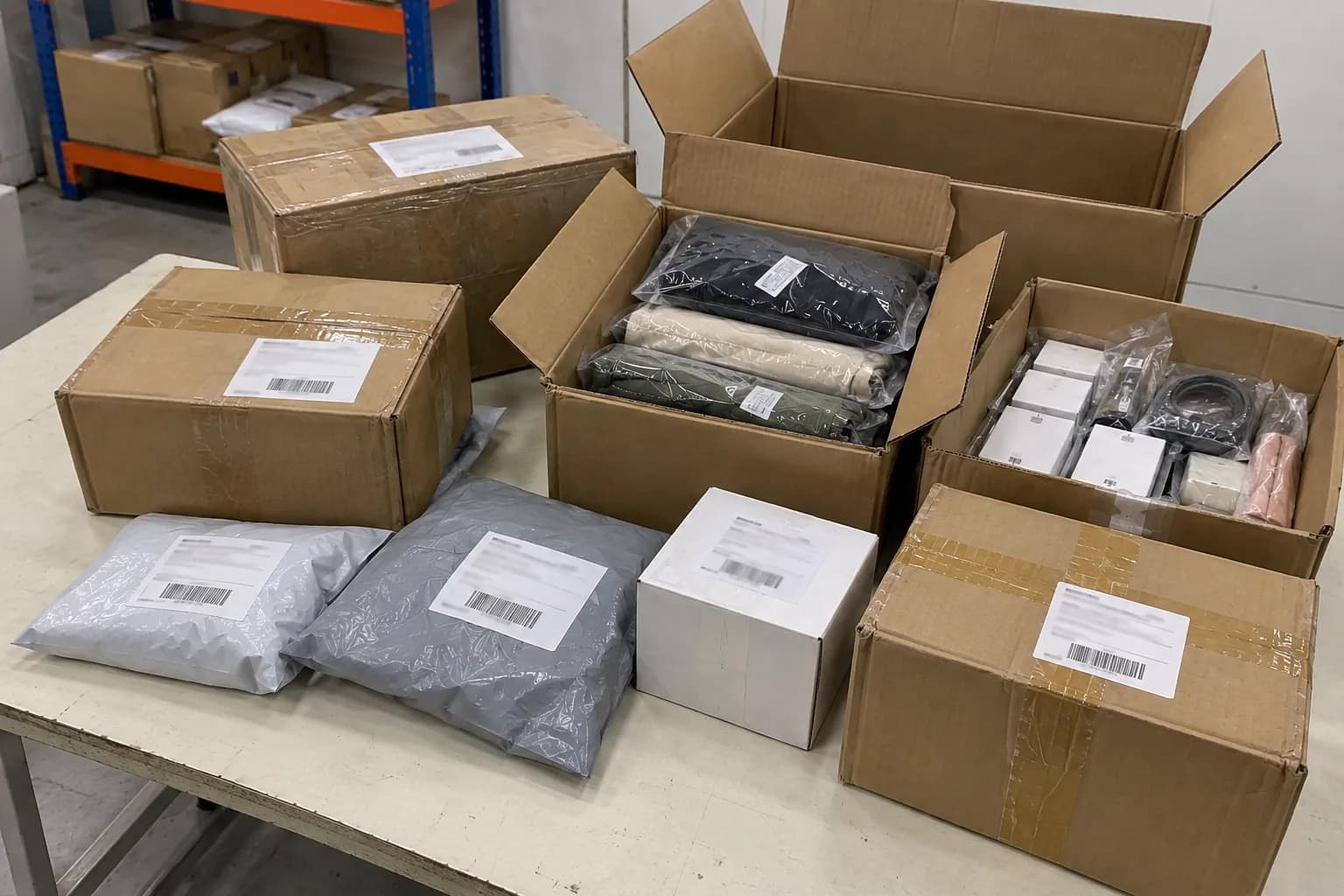
An operation holds your stock and ships your orders. Someone receives the goods, checks them, stores them and packs each order.
The decision is not which brand. It is which model your business is at.
| Marketplace | App | Operation | |
|---|---|---|---|
| Who holds stock | Nobody until you sell | Nobody until you sell | You do, at their site |
| Factory relationship | None | None | Yours |
| Packaging | Supplier's | Supplier's | Yours |
| Quality gate | Your customer | Your customer | Before it ships |
| Ships the day the order arrives | No | No | Yes |
| Right at | Testing an idea | Testing an idea | 10+ orders a day, branded |
Read the App column again. It is the Marketplace column, with automation on top. That is not a criticism — automating repetitive ordering is real work and saves real hours. It is a statement about what changes and what does not. An app changes how the order is placed. It does not change who holds the stock, who packs the box, or how long the customer waits, because it does not touch any of them.
The marketplaces
DHgate. A Chinese B2B and B2C marketplace. Same model as AliExpress with a different seller base, so it answers a product-availability problem and nothing else.
1688. Alibaba's domestic marketplace, priced for Chinese businesses buying from Chinese suppliers. The prices are genuinely lower for the same goods because there is no export layer. What you give up is everything that layer provided: it is in Chinese, pays in RMB, and ships only to addresses inside China. Most buyers need an agent to use it at all.
Alibaba.com. The export-facing sibling of 1688. Good at discovery and payment, and explicitly not a quality system — what the platform does not do covers where it stops.
The apps
Each of these connects a store to suppliers it does not own. They differ in which suppliers and how much automation.
| Platform | Model | What it does not change |
|---|---|---|
| DSers | Order automation for AliExpress | Stock, packaging, delivery time |
| Spocket | Connects to US and EU suppliers | The supplier relationship stays the platform's |
| Zendrop | Connects to vetted suppliers | Depends on the plan |
| AutoDS | Automation across several sources | Stock, packaging, delivery time |
What none of them changes: you order per sale, so the supplier's handling time stays in your customer's wait; the parcel leaves in the supplier's packaging; and the first person to inspect the goods is the person who bought them.
The operations
CJdropshipping. Operates warehouses in China and elsewhere, with sourcing, print on demand and a self-serve platform. Volume-oriented: the model is catalogue breadth and a free platform rather than a named account.
Neofulfill. Two warehouses in Shenzhen and a partner network across Europe and the United States — partner facilities are part of the operating network and are not Neofulfill-owned. Sourcing, quality control and fulfilment run by one team in one city, because the suppliers are a short drive away rather than a freight leg. Orders arrive from nine channels. On the China to United States lane we see 6 to 12 days on standard service and 3 to 5 on express, destination-dependent — ranges from our own shipments, not a guarantee.
It suits stores from around 10 orders a day. Below that the coordination costs more than it saves, and we say so on the first call.
What none of these lists tell you
Look at the ten names above. Eight are software. Two are physical operations.
Almost every AliExpress-alternatives article compares apps to apps and calls the job done, because software is easy to write about: you can list features. An operation is harder to compare, and it is the thing that actually changes your delivery time, your packaging and whether a defective batch reaches a customer.
If AliExpress disappointed you on choice, an app or another marketplace fixes it. If it disappointed you on delivery, branding or quality, no app will, because the app does not touch any of those. Only stock held somewhere does.
Choosing, in three questions
- Are you still testing? Stay on a marketplace. Holding stock before you know what sells is the expensive mistake.
- Do you know which SKUs sell? Move to an operation. The factory lead time comes out of your customer's wait entirely.
- Does your brand matter yet? Only an operation can put your packaging in the box, because somebody is packing your order rather than a supplier packing one of theirs.
How a dropshipping agent works covers the third case in detail, including what it costs and when you do not need one.
Common questions
What is the best AliExpress alternative?
Is DHgate better than AliExpress?
What is the cheapest AliExpress alternative?
Which alternative has the fastest shipping?
Can I use my own branding?
Do I need to leave AliExpress entirely?
Past the testing stage?
Send your order volume and destination mix. We come back with the lanes, what holding stock would do to your delivery times, and what it would cost per order.