
3PL for dropshipping: what changes when you hold stock
Why most 3PLs are built for wholesale and break on single-unit orders, what a dropshipping 3PL needs from you before day one, and the volume it starts paying for itself.
9 min read
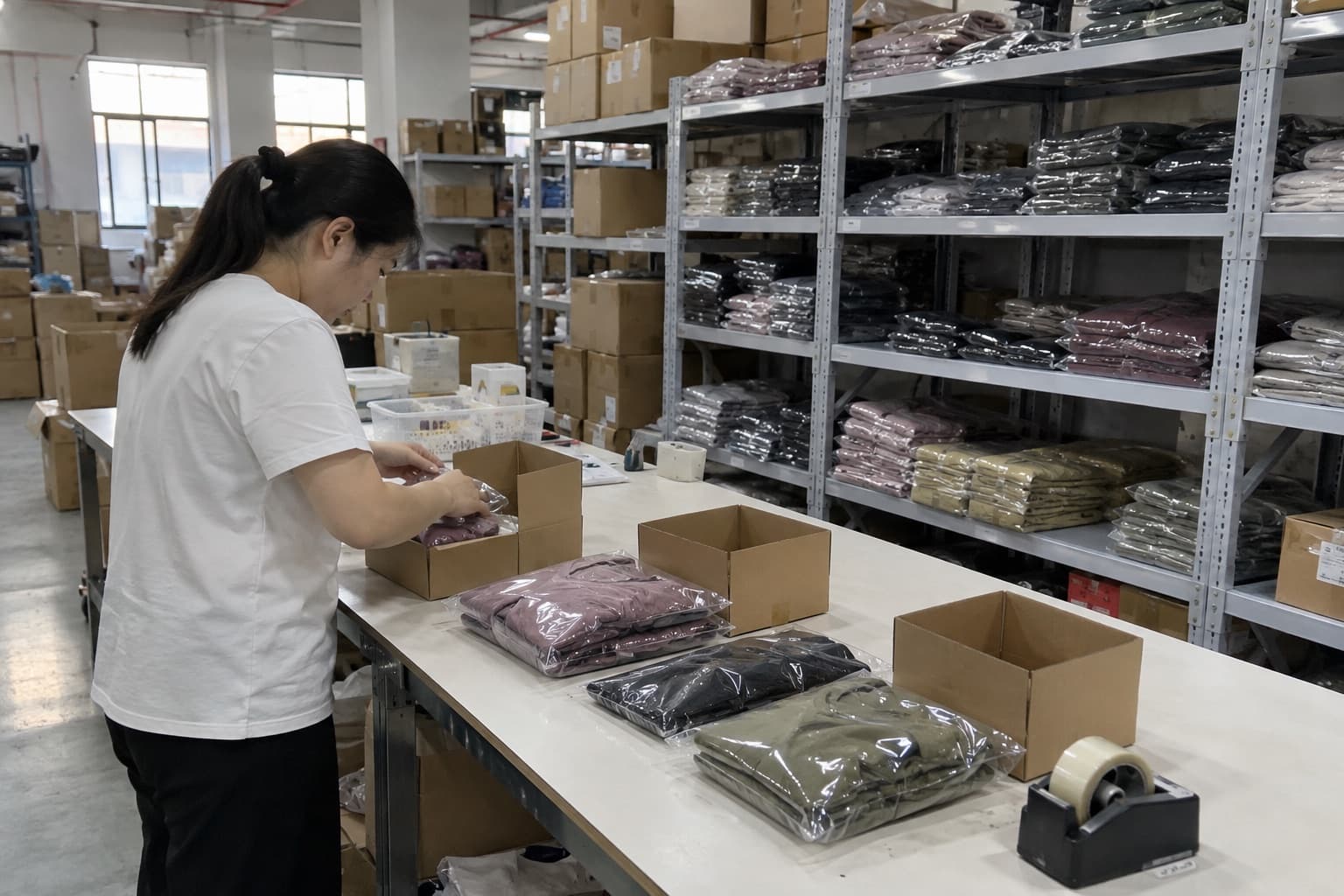
Neofulfill is a 3PL, so this is not a neutral article. The criteria below are stated so you can apply them to any provider, and the section on when not to do this yet is the one we would point you at first.
Most articles about using a 3PL for dropshipping explain what a 3PL is. That is not the part people get wrong.
The part people get wrong is assuming that a warehouse which handles fulfilment handles your kind of fulfilment. A facility that ships pallets to retailers efficiently can be slow and expensive at shipping one unit to one consumer, and you find out through your invoice.
Why dropshipping is an awkward shape for a standard 3PL
Conventional third-party logistics grew up around wholesale: predictable purchase orders, cases and pallets, a modest number of SKUs, and shipments to businesses.
Direct-to-consumer dropshipping is the opposite shape on every axis, and each difference costs the warehouse something.
| Wholesale 3PL | Dropshipping 3PL | |
|---|---|---|
| Typical order | Cases or pallets | One or two units |
| SKU count | Low, stable | High, and changing |
| Volume pattern | Scheduled POs | Whatever the ads did yesterday |
| Packing | Cartons to a dock | Branded parcels to homes |
| Returns | Rare, bulk | Routine, one at a time |
| What it is priced on | Pallets and space | Picks, parcels and SKU count |
Read the last row. A provider quoting you on pallet economics will either refuse single-unit work or price it as an exception, and an exception priced per order is a cost that scales with your success.
What actually changes operationally
Three things, and only the first one is obvious.
The supplier's handling time leaves your customer's wait. This is the whole point. With per-order buying, the supplier has to pick, pack and post after your customer has paid. With held stock, the first step is picking, because the goods are already on a shelf.
The quality gate moves in front of the customer. Goods are received and checked before they are put away, so a bad batch is found in a warehouse rather than by the person who bought it. Nobody opens a parcel that was never held.
Your packaging becomes possible. Someone is packing your order rather than forwarding a supplier's parcel, so the box, the insert and the tape can be yours. Custom packaging only works operationally if it is already at the warehouse when the order arrives.
What a 3PL needs from you before day one
Five things. A go-live slips because one of them was assumed rather than agreed.
- A SKU list that matches your store exactly. Every variant, with the identifier your channel actually sends. Colour and size are separate SKUs, not attributes someone will interpret.
- Barcodes, or a plan to apply them. Goods that arrive unlabelled have to be labelled by someone, and that is a cost and a delay.
- A packaging specification. Which box, which filler, what goes inside, and what happens when the item does not fit the standard one.
- A working order connection. Orders in, tracking back out, inventory synced. Decide what happens when the connection drops, because it will.
- A returns policy you have actually written. Who pays, what gets restocked, what gets written off, and who decides.
Ask a prospective provider to walk through all five before you discuss price. A provider who treats these as paperwork rather than as the project is telling you how the onboarding will go.
What it costs, in the only way worth comparing
Never compare headline per-order rates. Compare which lines are inside them.
Receiving, storage, pick, pack, the outbound label, duty, payment processing and returns are all real costs, and providers draw the boundary of the word "fulfilment" in different places. A low number quoting pick-and-pack only becomes the higher invoice once the rest arrives separately.
Fulfillment cost per order sets out the eight lines and which of them improve with volume. The short version: the outbound label is usually the largest single line, and it is the one volume does least to move.
Where the stock should sit
The second decision, and the one with the larger consequence.
Stock held in your customer's region ships domestically: fastest delivery, most cash tied up far from where the goods were made. Stock held in China ships internationally: slower, far less capital committed, and much easier to change your range.
On the China to United States lane we see 6 to 12 days on standard service and 3 to 5 on express, destination-dependent — ranges from our own shipments, not a guarantee. China 3PL versus a local 3PL works through the trade properly, including why most brands end up running both.
China 3PL and dropshipping fulfilment from China set out what each side covers on our account.
When not to do this yet
Around 10 orders a day is where fulfilment of any kind starts paying for itself. Below that, holding stock replaces a problem you have with two you do not: a stock commitment on products that have not proven themselves, and a minimum invoice every month whether you ship or not.
The better shape below that threshold is the split almost nobody runs: keep testing new products the cheap way with no stock commitment, and move only the proven winners into held stock. Dropshipping from China covers running the first half well.
If you are below the threshold, the honest answer is that a 3PL is not your constraint yet. We say so on the first call rather than onboarding an account that will not work.
Common questions
What is a 3PL for dropshipping?
Can you use a 3PL for dropshipping?
What is the difference between dropshipping and 3PL fulfillment?
How much volume do you need for a 3PL?
What does a 3PL need from me before it can start?
Should my 3PL be in China or in my customer's country?
Moving from per-order buying to held stock?
Send your SKU count, your monthly order volume and your destination mix. We come back with what holding stock would do to your delivery times and what it would cost per order.