
Apparel sourcing agent in China: what the job actually involves
Why sourcing clothing is not sourcing with fabric attached: the sample ladder, MOQ per colourway, trims as their own supply chain, and what to ask an agent.
10 min read
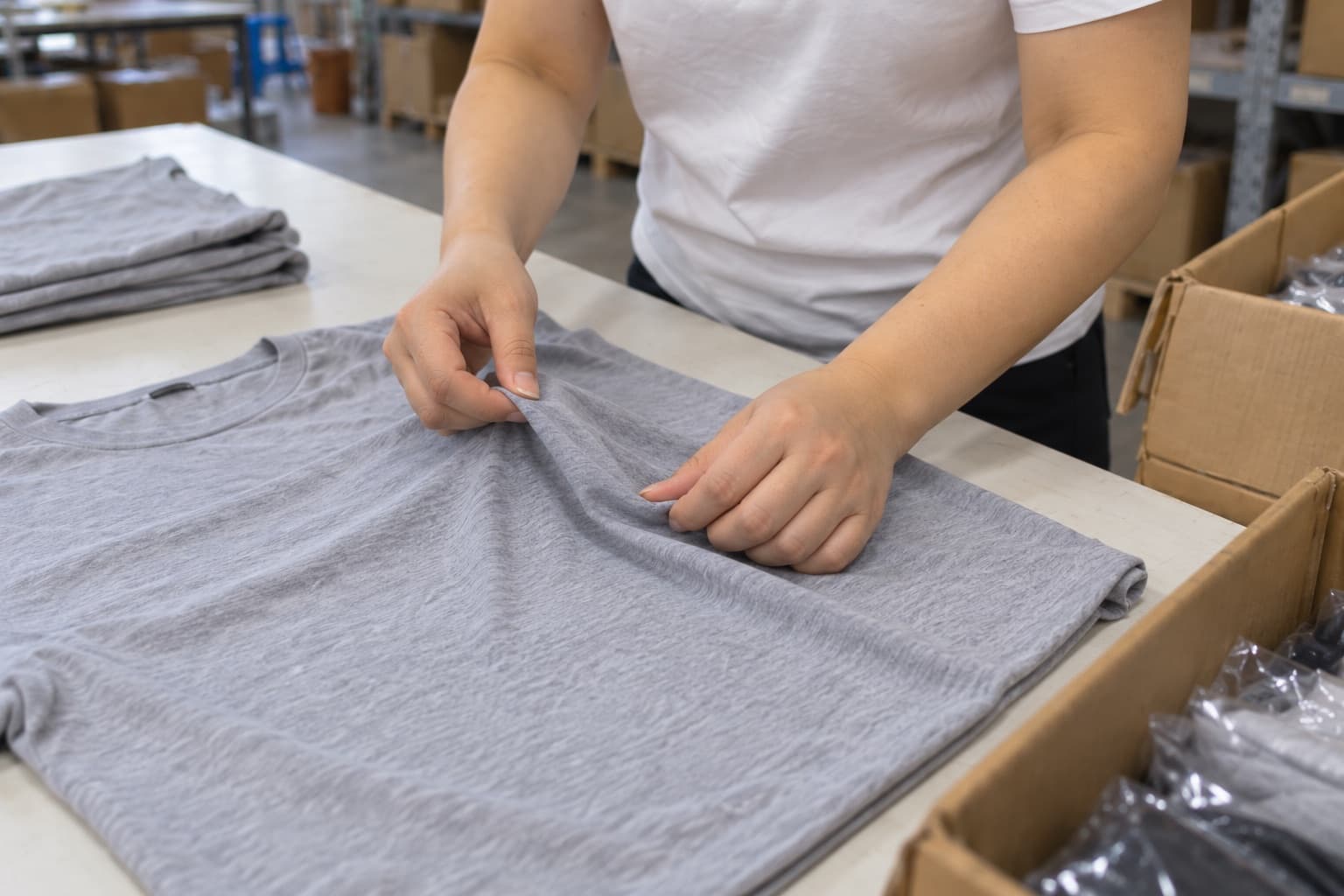
Neofulfill runs apparel sourcing, so this is not neutral. It is written as a sequence you could run yourself, because that is the honest way to describe what the fee is for.
Searched as apparel sourcing agent, clothing sourcing agent or garment sourcing agent, people are asking the same question: who handles the part between a design and a box of finished goods.
Most answers describe the generic job — find a factory, negotiate, inspect. That description is accurate for a product that already exists. Apparel is the category where it stops being accurate, because when you place the order the garment does not exist yet, and neither does the fabric it will be made from.
What makes apparel different from general sourcing
Four things, and they compound.
- The fabric is a separate purchase with its own lead time. It is bought or dyed before cutting starts. The factory's quoted production time usually begins the day the fabric lands.
- The product is developed, not selected. Fit is established over several sample rounds, not agreed in an email.
- Minimums are usually per colourway. The mill dyes a batch, so three colours can be three minimums.
- Trims come from elsewhere. Zips, labels, drawcords, hangtags and polybags are their own suppliers. A garment is not finished until the slowest trim arrives.
None of this is exotic. It is simply a longer chain than most sourcing guides describe, and the failures happen at the joins.
The sample ladder, and why skipping a rung costs more than it saves
This is the part an agent earns their fee on, and the part most first-time buyers compress.
| Sample | What it answers | Skipping it means |
|---|---|---|
| Prototype | Can this factory make this at all | Finding out during production |
| Fit sample | Does it fit the body you designed for | Fixing fit after the fabric is cut |
| Size set | Does the grading hold across the run | One size fits, the rest do not |
| Pre-production | The approved reference, in final fabric and trims | No agreed standard to inspect against |
| Top of production | Does the first output match the approved sample | Discovering drift at the dock |
The pre-production sample is the one that matters most, because it becomes the reference everything after it is judged against. Without an approved one, an inspection has no standard to apply and any argument about quality becomes a matter of opinion.
Each rung is a production cycle plus shipping each way. That is why apparel timelines are longer than they look, and why compressing the ladder is the most expensive saving available.
The specification, and the test it has to pass
A tech pack is not a drawing. It is a set of criteria someone who has never spoken to you could apply and reach your verdict.
For a garment that means: measurements at every point of measure with tolerances, the fabric by composition and weight rather than by feel, colour by a reference rather than a name, every trim named, the construction at each seam, and the labelling required for the market you sell into.
"Navy, good quality cotton" is not a specification. It is a hope, and the factory will resolve the ambiguity in its own favour, which is what any of us would do.
The same test applies to us. If what we send a factory on your behalf would not let a stranger judge a sample, we have not done the job.
Where apparel orders go wrong
Five failures account for most of it, and all five are visible before shipment if someone is looking.
Colour drifts between rolls. Dye lots differ. Two cartons of the same style can be visibly different, and the customer who receives both is the one who notices.
Grading breaks. The sample size fits and the rest of the run does not, because the size increments were never checked against the approved sample.
Shrinkage after washing. A garment that fits until it is laundered. A wash test before shipment costs almost nothing and catches it.
Trims arrive late or wrong. The garments are finished and sitting, waiting on labels. This is the most common cause of a late apparel shipment and it is rarely in the factory's quoted timeline.
Labelling fails the destination. Fibre composition, care symbols and country of origin are regulated per market. Getting this wrong turns a shipment into a customs problem rather than a quality one.
Inspecting a garment run
Apparel inspection is measurement work before it is judgement work. How AQL sampling works covers how a batch is judged; what follows is what to judge it on.
- Measurements across the size run, against the approved sample, not just in the sample size.
- Colour consistency between cartons and between rolls, under consistent light.
- Seam strength and stitch density at the points that take load.
- Trims, labels and packaging against the approved reference, including the care label wording.
- A wash test where the fabric carries any shrinkage or colour-bleed risk.
Ask who performs this and whether you get the measurement sheet rather than a verdict. A report that says "passed" without numbers is not evidence of anything. Pre-shipment inspection sets out what a usable report contains.
What to ask before appointing anyone
Four questions, and the answers are more informative than any price list.
- Have you run this fabric before? Knits, wovens, denim and performance fabrics are different supply chains, not variations of one.
- Who buys the fabric and the trims? If the answer is vague, nobody owns the longest lead time in the project.
- What does your inspection produce? A measurement sheet against the approved sample, or an opinion.
- What happens when a batch fails? The answer tells you whether you are buying representation or a reseller's margin.
How sourcing agents charge covers the fee side and the incentives inside each structure, which is the other half of this decision.
After production: where the stock sits
Apparel is a variant problem before it is a volume problem. One style in four colours and five sizes is twenty SKUs, and every one of them has to be picked correctly.
That is why apparel is unforgiving of a fulfilment setup that was fine for a single-SKU product, and why apparel fulfilment is organised around variants rather than units. On the China to United States lane we see 6 to 12 days on standard service and 3 to 5 on express, destination-dependent — ranges from our own shipments, not a guarantee.
If the product is going to carry your own branding rather than a supplier's, private label manufacturers in China covers what that adds before the first unit ships.
Common questions
What does an apparel sourcing agent do?
What is the difference between a clothing sourcing agent and a general sourcing agent?
How long does apparel production take?
What is the minimum order quantity for clothing?
Do I need a garment sourcing agent if I have a factory already?
What should I inspect on a clothing order?
Have a garment ready to produce?
Send the tech pack or the reference sample, the quantity and the size run. We check certifications, reputation and reviews from the factory's own customers, and where the project warrants it we go to the factory.